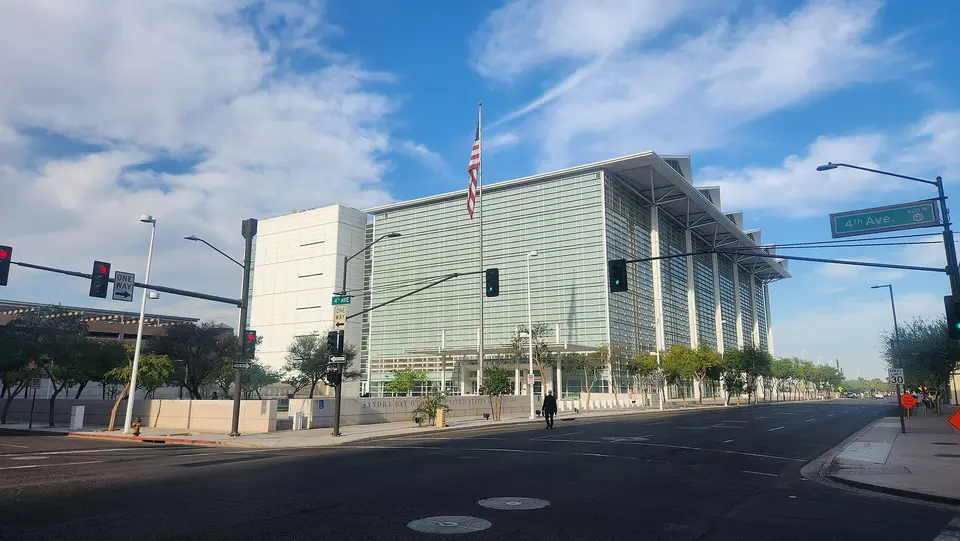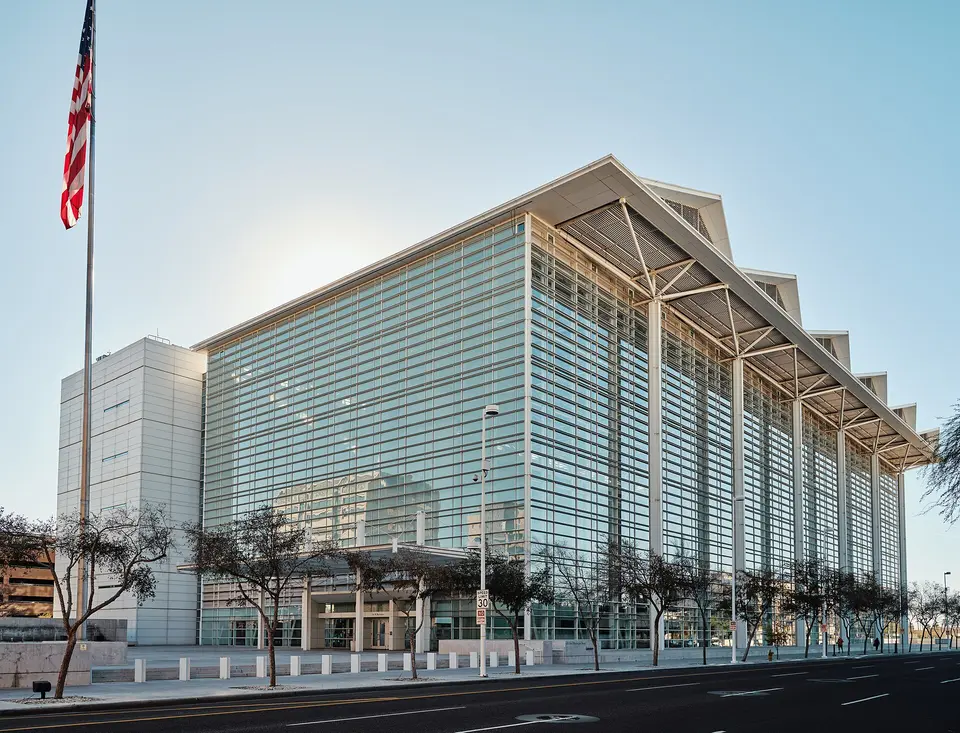
Arizona immigration courts are quietly shifting from open-by-default to permission-required. Reporters with Arizona State University’s Howard Center for Investigative Journalism were told at three Arizona locations in February and April that public attendance hinges on a judge’s approval, despite federal guidance that says observers do not need to check in before entering. Two federal lawsuits, in Washington, D.C., and New York, now ask judges to say how far immigration courts can go in narrowing access.
On Feb. 9, 2026, at the Florence Immigration Court, security officers and court staff told Howard Center reporters that “attendance at all hearings required judicial approval,” the Center reported. The same procedure was observed at the Eloy Detention Center Immigration Court on Feb. 11 and the Phoenix Immigration Court on April 30. That practice appears to depart from a February 2026 Executive Office for Immigration Review fact sheet that states visitors are not required to check in before observing, though an immigration judge may ask visitors to identify themselves at the start.
The consequence is simple and measurable: openness becomes a gatekeeping test. If access depends on whoever answers the door or phone, transparency varies by building and shift, not by law. That is the crux of two pending lawsuits that argue courts are closing more than regulations allow, and that any closure should be justified on the record with a chance for the public to object.
The Minnesota-based Advocates for Human Rights sued in March 2026 after it said observers were locked out of Fort Snelling Immigration Court starting in October 2025. Federal law allows closing an immigration hearing only in specific circumstances, like space limits or the need to protect witnesses or the public interest. AHR seeks a declaration that the restrictions violate federal law and the First Amendment, plus an injunction and an order requiring officials to justify future closures on the record. In January, EOIR’s press secretary responded to AHR that “Immigration judges are independent adjudicators and may determine that a hearing should be closed or held with limited attendance.”
The federal government’s April response asked the D.C. court to dismiss the Fort Snelling case, arguing the plaintiffs showed no irreparable harm and cited a tiny fraction of overall activity. “In comparison to the more than 47,000 hearings occurring in the last year at Fort Snelling, Plaintiff presents a small number of asserted one-off errors by individual Immigration Judges and court staff, not any official policy or consistent practice,” the filing said. The government also warned that requiring on-the-record closure explanations would burden already strained courts and that the plaintiffs cannot bind other courts without evidence from those locations.
A separate March 2026 lawsuit in the Southern District of New York, filed by five city residents including a lawyer, a journalist and a priest, alleges repeated denials of public access since June 2025. One plaintiff, the Rev. Fabián Arias, says he has been removed from courtrooms more than 20 times. The suit asks the court to declare that restrictions violate the First Amendment and to permanently enjoin policies that go beyond what the law allows. According to court records cited by the Howard Center, the government has filed a motion opposing the application and a hearing had not been set at the time of publication.