
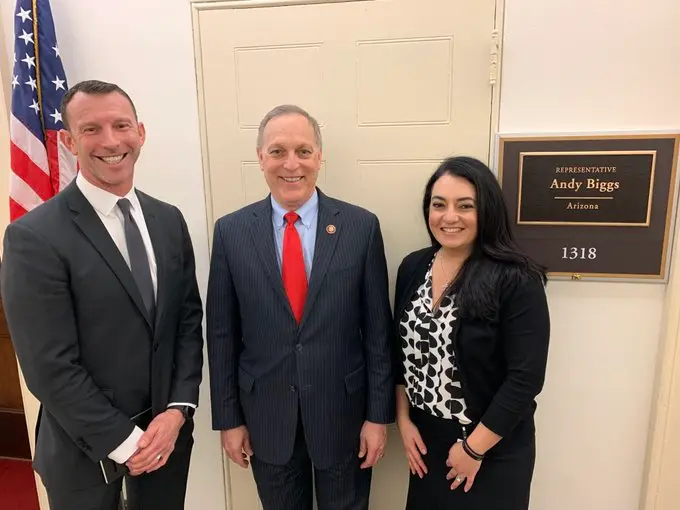
Arizona’s governor’s race is colliding with the courts beat again, as Arizona Mirror reports that a group of doctors and progressive organizations are warning voters about Republican nominee Andy Biggs’ “long record” of attacking access to health care and abortion care (https://azmirror.com/2026/07/23/doctors-warn-andy-biggs-record-on-healthcare-abortion-should-alarm-arizona-voters/). The claims, attributed to physicians and allied groups, preview a fall campaign in which the scope of state authority over medical regulation and the durability of any policy changes are likely to be tested in court.
The contest itself is rated among the nation’s most competitive. Arizona Capitol Times, publishing Pluribus News ratings, calls Gov. Katie Hobbs “the most endangered incumbent Democrat” and labels the race Lean Democrat. The write-up notes Biggs faces “the added baggage of being associated with Washington, D.C.” while pointing out former President Donald Trump carried Arizona by nearly 6 points in 2024, his largest margin in any swing state (https://azcapitoltimes.com/news/2026/07/24/the-most-competitive-governors-races-of-2026/).
The consequence for voters is straightforward: if the campaign centers on abortion access and health care regulation, the next governor’s choices will draw immediate legal scrutiny. In recent cycles, executive directives to agencies, emergency rules, and fast-moving legislative packages have triggered injunction fights that turn campaign promises into litigation strategies. The durable outcomes are those grounded in clear statutory authority, built administrative records, and legislation that can withstand facial and as-applied challenges.
The Mirror’s account does not lay out specific measures or votes, but its framing signals an effort to make the election a referendum on access to care. The Capitol Times piece, meanwhile, characterizes Biggs as an “election-denialist Trump ally” and says Hobbs benefits from facing another such opponent, after her 2022 race against Kari Lake. Those are descriptions from that outlet’s analysis, not legal conclusions. For court-facing governance, labels matter less than what a governor directs agencies to do, how rules are justified, and whether statutory text supports the action.
Authority, remedy, cost, and outcome should be the lens. Authority: a governor can sign or veto legislation, set enforcement and litigation priorities, and oversee agency rulemaking. Remedy: executive orders and rules can move quickly but are vulnerable without a record tied to statutes. Cost: rapid policy swings invite suits that consume state resources and impose compliance whiplash on providers. Outcome: courts frequently sort contested health mandates through preliminary relief and merits rulings, so overreach tends to end in injunctions while carefully grounded measures survive.
Both parties are signaling the terrain they want. The Republican Governors Association told the Capitol Times that “Republican governors dominate rankings for wage growth, job creation, affordability and lower energy costs,” contrasting that with what it called “fraud, out-of-control spending and rising crime” in Democratic states. “It’s commonsense versus crazy,” the RGA spokesperson said, urging voters to elect Republicans (https://azcapitoltimes.com/news/2026/07/24/the-most-competitive-governors-races-of-2026/). That message leans on economic performance as the metric and implies a litigation-light approach focused on administration rather than courtroom fights.