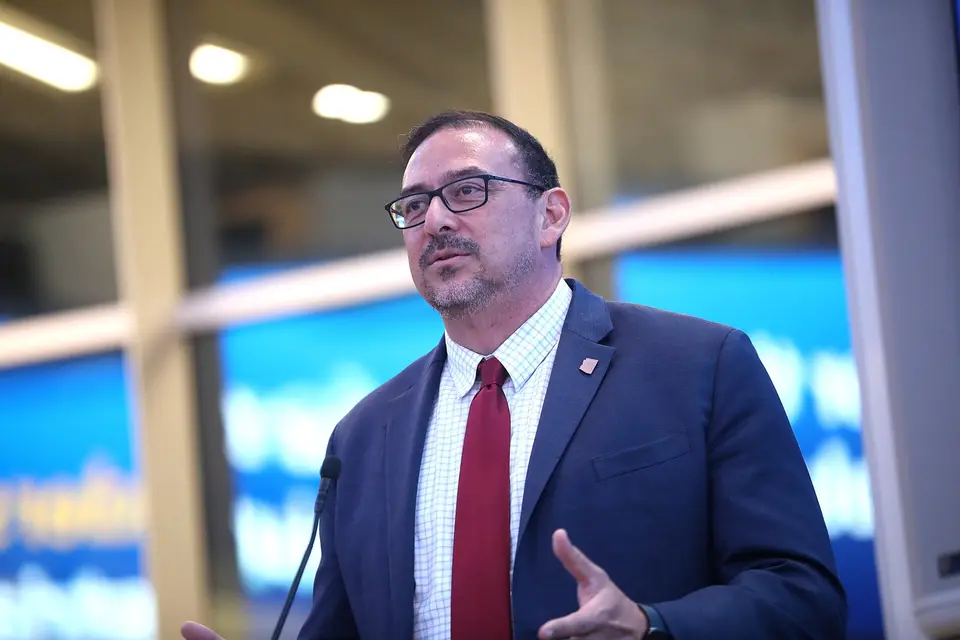
Alex Kolodin won the Republican nomination for Arizona Secretary of State on Tuesday night, July 21, according to the Associated Press call cited by the Arizona Globe. Within minutes, the Globe reports, national coverage led with a single descriptor for the GOP nominee: “election denier.” The headline fight started before the general election campaign did.
The consequence is immediate. Arizona now heads into a closely watched Secretary of State race between Kolodin and Democratic incumbent Adrian Fontes, a contest the Arizona Globe expects will draw national money, national media, and renewed debate over how the state runs elections. If the first draft of the national narrative hardens around a label rather than operations and results, voters will be asked to pick a brand instead of a manager.
The Republican primary also revealed a split inside the party. Former state party chair Gina Swoboda conceded and wished the GOP ticket success, the Globe reports, but she had argued throughout the campaign that Kolodin would be a weaker general election choice and “too political” for the office. She warned that under a Kolodin administration “the whole state will immediately grind to a halt as [Kolodin] starts to fight with every single county,” according to the Globe’s account of her remarks. Primary voters disagreed, and AP called the race for Kolodin just minutes after the first wave of early votes posted, the outlet reported.
Kolodin pivoted to November with a message about performance, not personality. “Arizona voters spoke up decisively for lawful, transparent, honest, and fair elections,” he said in a victory statement quoted by the Globe. He added that the result shows voters are “sick and tired of Adrian Fontes’ mismanagement of our election system” and ready for “world-class elections that Democrats, Republicans, and Independents can be proud of.” That is the right promise. Now it needs a bill of materials and a delivery schedule.
The Arizona Globe highlights how quickly some national outlets applied the “election denier” label and centered 2020 disputes in their coverage. Voters can decide whether they agree with Kolodin’s past views, but a one-word epithet is not a plan. Nor does it tell Arizonans what would change in their polling places, how county relationships would be handled, or how accuracy, timeliness, and transparency would be measured and reported. Media note the past; administrators must specify the future.
Swoboda’s critique sets a practical test for Kolodin. If the fear is constant fights with counties, he should publish a clear engagement framework before ballots go out in November: what he would ask of counties, when, and how disagreements would be resolved without stalling basic functions. If the promise is “world-class” elections, he should define the metrics. How will he judge whether voters experienced fewer problems? What are the turnaround targets for key tasks? Which reports will the public see and on what timetable? Those are testable claims voters can weigh against the incumbent’s record.