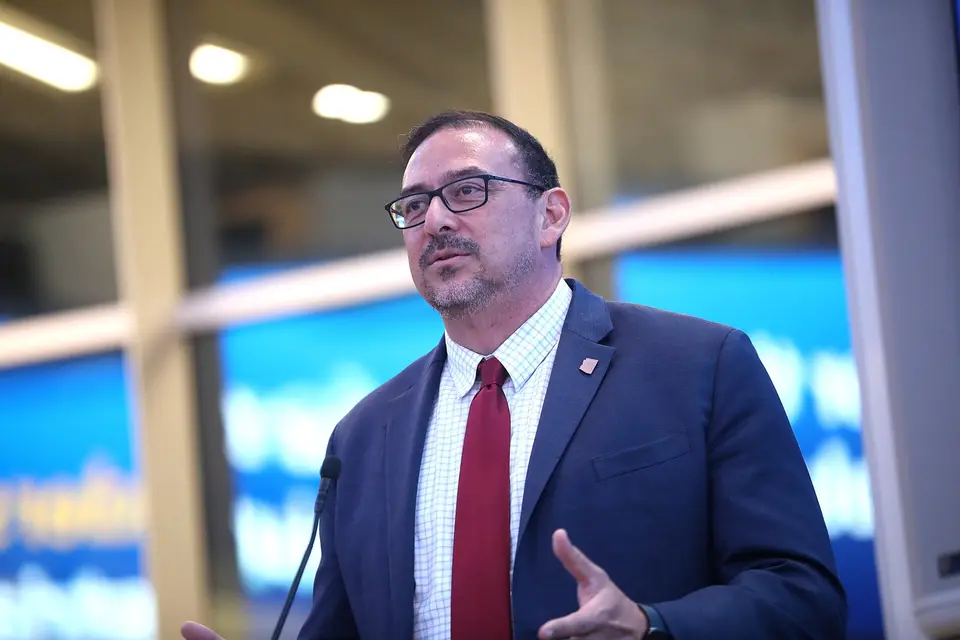

House Judiciary Chair Quang Nguyen said he will continue to block any bill that would force clergy to report crimes revealed in confession, even after a unanimous Arizona Supreme Court ruling last week clarified the scope of the clergy privilege. According to Capitol Media Services reporting, Nguyen said he will not support legislation requiring disclosure of information obtained through confession, regardless of what is revealed.
The practical consequence is straightforward. As long as Republicans hold the House majority and Nguyen controls the Judiciary Committee calendar, Rep. Stacey Travers’ proposal to carve out an exception for ongoing child abuse will not receive a hearing. Nguyen told Capitol Media Services that if Travers finds the issue so important, she will have to wait until 2029 when he is no longer a legislator for any chance of a hearing. Travers, a Phoenix Democrat, countered that flipping the chamber this year would put a different chair in charge and change the calculus.
The Supreme Court’s ruling, as described in the Capitol Media Services account, held that religious organizations may determine what constitutes a confession or other protected confidential communication. The justices sided with The Church of Jesus Christ of Latter-day Saints in litigation connected to Bisbee resident Paul Adams. Church bishops learned in 2011 that Adams was sexually abusing his 7-year-old daughter. The court concluded those communications fell within the church’s confidential religious process and were protected under Arizona’s clergy privilege. As a result, Adams continued abusing his daughter for another seven years. During that time, authorities say he also began sexually abusing her infant sister and posted videos of the abuse online. He was arrested in 2017 after Interpol tipped off the Department of Homeland Security, and he later died by suicide in prison while awaiting trial.
Nguyen, a Prescott Valley Republican, framed his position in terms of religious practice and existing statute. “As a Catholic, confession is one of the very important sacraments of the church,” he said. “I will not break that sacrament. I will not be the guy to do that.” He also noted, per the report, that Arizona law already requires clergy to report ongoing abuse or other crimes they learn about outside the confessional.
Travers says her bill would preserve clergy confidentiality in most circumstances while creating an exception when someone confesses to ongoing child abuse or abuse that is likely to continue. She has characterized the scenario she seeks to address as a conditional confession, where a congregant admits ongoing abuse with the assurance that no one will file a report. As quoted, she argued that absolution should not become a shield for future harm.
This is not a new fight. Former Sen. Victoria Steele ran similar legislation three times and could not get it to the Senate floor. Then Senate Judiciary Chair Eddie Farnsworth blocked the changes, arguing that privilege has long been necessary for people to engage in their religious beliefs. In his view, if a bishop were obligated to go to the police, “would they come in and confess? Probably not.” Steele, who has spoken publicly as a survivor of extreme abuse, backed the changes and has pointed to the Adams case and the criminal sentence for his wife, Leizza, who knew of the abuse and served two and a half years in prison.